Key facts
- Online co-op is player-hosted; one player hosts and friends join through Steam.
- The demo does not enforce a fixed player limit. The practical number depends on the host PC and internet connection.
- No dedicated server support has been announced.
- Only Windows PC through Steam has been announced, so console crossplay is not a current question.
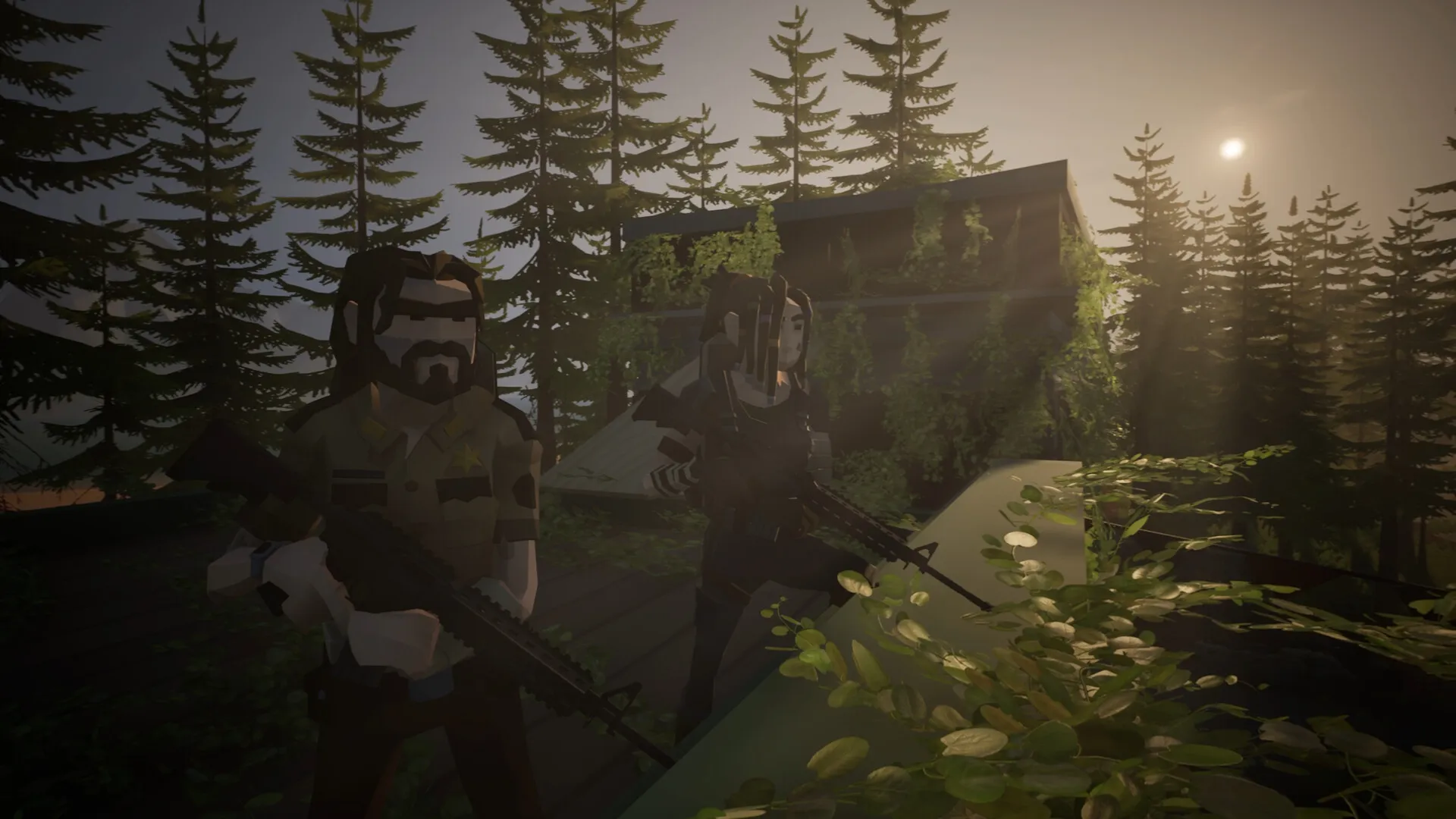
Co-op is one of Never Be Alone’s headline features, and also one of the easiest things to misunderstand before launch. The official pitch is “seamless co-op” with “as many players as the host computer can handle.” That is not the same as a dedicated server with a fixed slot count. The distinction matters when you are planning an evening with friends.
The confirmed model: one player hosts, friends join
The demo page is unusually direct:
- The game does not currently enforce a fixed player limit.
- The practical number of players depends on the host computer and internet connection.
- Co-op is player-hosted through Steam.
So the host is running the world. Everyone else is a guest in it. There is no announced dedicated-server option, no server browser, and no confirmed host migration. If the host disconnects, treat the session as interrupted until Beast Studios documents otherwise.
This is also why “unlimited players” is a misleading phrase. The game may not stop you from inviting a large group, but the host’s CPU and upload bandwidth will have an opinion. A duo or a small group is the sensible starting point; add players only after you know how the host machine behaves.
What you need before the first session
- The same build. Everyone should install the free demo or the Early Access build, not a mix of old and new versions.
- Steam friends. Invitations run through Steam, so add each other before the session starts.
- A host with the best hardware and a wired connection. This is the single highest-leverage decision you can make.
- Voice chat outside the game. The game supports co-op; it does not advertise a built-in voice system. Use Discord or Steam voice.
- A shared plan for the first hour. “We’ll figure it out” usually means four people looting the same kitchen.
The host is not the leader. The host is the person whose machine the world lives on. Those are different jobs, and confusing them is how groups lose an evening to troubleshooting.
The real player limit is a performance question
There is no published benchmark for player count. That means any “max players” number you see is either a guess or a report from one machine.
A sensible way to test your group:
- Start with two players. Confirm invites, voice, and a full mission work.
- Add one player at a time. Watch for host-side stutter, long load times, and desync around vehicles or large bases.
- Stop adding when the host’s experience degrades. The guests may still look fine while the host is doing all the work.
Do not plan a six-player event around the word “seamless.” Plan it around the machine that will host it.
Roles that make a co-op session better
The game’s systems naturally create jobs. Assigning them loosely is more useful than a rigid class system, especially because no character classes or skill trees have been announced.
- Quartermaster. Stays close to storage, sorts loot, and keeps the group from carrying everything at once. Inventory pressure is a real demo problem.
- Builder. Owns the safezone build order and the material chain. This person should read the base building guide.
- Scout. Moves light, marks routes, and does not loot the first building they see. The scout’s job is information.
- Driver. Owns the vehicle, fuel, repairs, and the decision to turn back. The vehicle guide covers why this is a real role rather than a joke.
In a duo, each person takes two roles. In a larger group, rotate the quartermaster so one person is not stuck in menus all night.
Noise discipline is harder with friends
A solo player only has to control one gun. A group has to control everyone’s.
- Agree on a signal before entering a POI. A whistle, a ping, or a simple “one shot means leave” works.
- Do not all fire at the first walker. One gunshot is a direction; four is a conversation.
- Keep the vehicle away from the door you plan to loot. An engine is one of the loudest things you own.
- If someone goes down, the group’s first job is to stop the bleed, not to finish the loot room.
The infected survival guide explains the threat model in more detail. The short version: space and line of sight matter more than damage, and those are group resources.
Hosting, saves, and the honest unknowns
Beast Studios has not published a co-op technical FAQ covering save ownership, host migration, or dedicated servers. The demo page confirms player hosting; it does not confirm what happens to the world if the host’s save is lost.
Until that changes:
- Treat the host’s save as the only copy of the campaign.
- Do not delete or overwrite a demo save casually.
- Do not assume demo progress will carry into Early Access; that has not been announced.
- Do not assume a friend can host the same world. There is no confirmed shared-world system.
These are cautions, not features. The absence of a dedicated-server announcement is not proof that one will never exist; it is simply the current record.
Crossplay and platforms
Only Windows PC through Steam has been announced. That makes crossplay a non-question for now: there are no console versions to connect to. If Beast Studios announces consoles later, crossplay will need its own confirmation.
A five-minute pre-flight checklist
- Everyone is on the same build.
- The host is on wired internet.
- Voice chat works before anyone loads in.
- Roles are assigned, even loosely.
- The group knows the route home.
- Someone is responsible for storage, not just looting.
- Everyone understands that the host’s machine is the limit.
The co-op host kit turns this into an interactive checklist you can keep in the browser.
Last verified
2026-11-19
This guide combines official Beast Studios information with clearly labelled demo observations. Where the public record is empty, the page says so. See the editorial policy and the full source list.